


As America Underwent Fundamental Changes in the 1960s, Many of Woodruff’s Finest Athletes Became the Faces of Desegregation. They Helped Bring the Town Together Under One Name, Wolverines. This is Their Story.
By: Garrett Mitchell, Staff Writer
Turn right onto Allen St. from Main St., then make a left onto New Bethel Road. Less than half a mile down that nondescript stretch of asphalt on Woodruff’s southside, you will find an old, decrepit complex of brick buildings on the left.
Those skeletal remains are all that is left today of New Bethel, once Woodruff’s African American public high school in the days before desegregation. They are the reminder of a troubled time in our history, not just in Woodruff, but across the country, in which not everyone was counted as equal.
Exactly one and a half miles away, across the railroad tracks and down Cross Anchor Highway, is Woodruff High School. That distance can be covered today in just three minutes in a vehicle, but in 1965 it may as well have been an entire world away for the students of New Bethel.
But change was on the way.
Change has always been viewed by many that are set in their ways as a sort of dirty word, a proverbial upsetting of the apple cart meant to disrupt the status quo that works for them. But when the status quo benefits some and hurts others, those who are our native sons and daughters, then change should not be feared, but welcomed.
All it takes is a brave few to effect change. Throughout 20th century America, athletes were often at the forefront of changing times and beliefs. Woodruff, as it turns out, was no different.
When the long overdue time came to shatter the racial barriers of the segregated South, the forefront of that effort in Woodruff was led by some of the greatest athletes, and ambassadors, in our town’s extensive and storied history.
Some of these courageous young men and women leaped passionately at the chance to connect the divide, while others would later follow and blaze their own trails, but all are true Woodruff heroes no matter how they helped span the bridge that connected us all as one; as Wolverines.
By the start of the school year in 1966, African American students in Woodruff were given the option of staying at their school or enrolling in Woodruff’s public schools. Not everyone at New Bethel was quick to make that transition for myriad reasons, but others took a giant leap of faith.
Greg Anderson was one of the first, and would go on to become one of the most storied football and basketball players in Woodruff High School history.
Anderson was only in the 10th grade in 1966 when he decided to take those tentative first steps by leaving New Bethel.

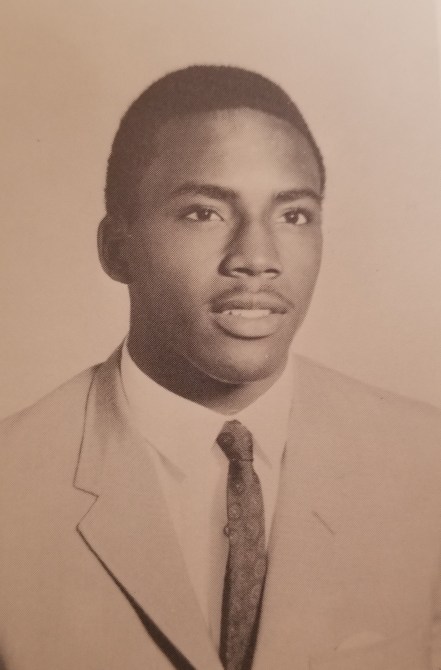
“It was a challenging time,” recalled Anderson. “It was the unknown. Even though you were still at home, still in Woodruff, at New Bethel, you knew the teachers and students. Moving over to Woodruff, you didn’t know anybody, so it was all a new learning process. When you are 15, it can be a little frightful, but I was a big kid, so I could handle it.”
And just as it was a changing of the times for Anderson and the first black students to transition to Woodruff, so it was for Woodruff High’s student body. That uncertainty, naturally, would have been palpable for all involved. Still, Anderson continued that from his perspective, he was well-received by the student body of his new high school and new football coach.
“Everyone was nice,” he said. “I never had a problem. They were probably sizing up the situation also, just like I was. Then, Coach Varner, he was a stern tactician; I guess he told the folks, look, I don’t want any craziness going on here. You either shape up or you ship out.”
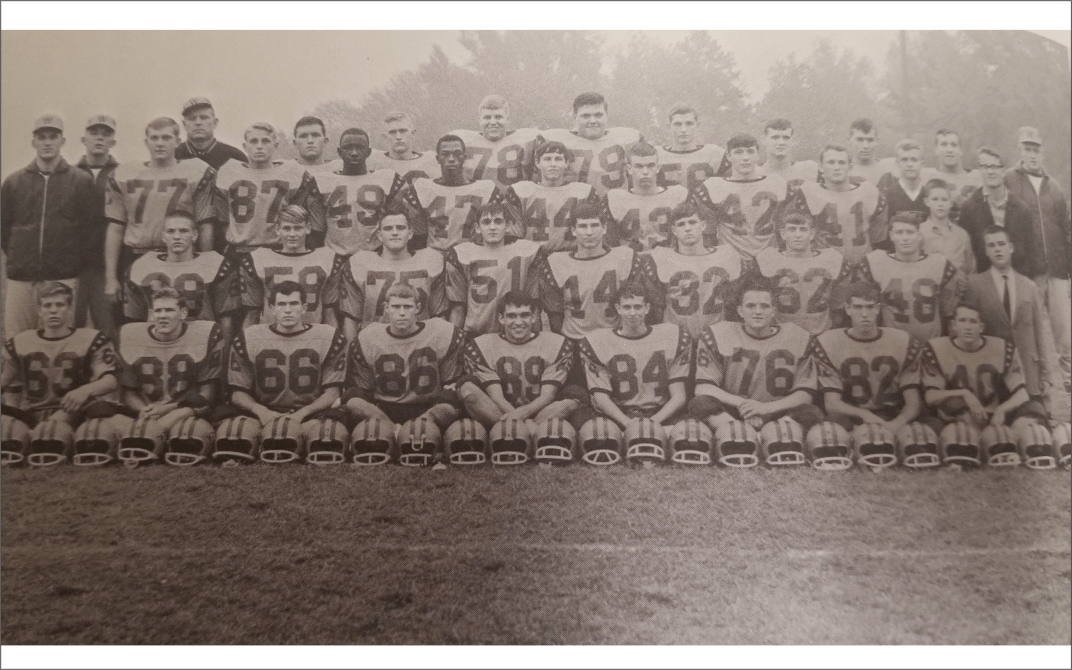
Nine football players became the first African American athletes to play for Coach Varner and Woodruff during the 1966 football season, which was one year removed from the Wolverines’ perfect 13-0 season and third state championship.
Two of those players, Marshall Stephens and future Hall of Famer Larry Fryer, became the first black football players for the Woodruff High School varsity team.
Anderson, along with Gary Young, Lewis Scott, Milford Johnson, Charles Gray, Michael Brewton, and Willie Pearson, all played their first season in maroon and gold on Varner’s junior varsity squad.
The color barrier had been breached, and the nine players from New Bethel who played football for the Woodruff Wolverines in the fall of ‘66 were among the first wielders of the mighty hammer that struck the initials blows against injustice and exclusion in Woodruff’s schools. Many would follow in their footsteps over the next two years, though some with perhaps more trepidation than others.
In 1966, desegregation of schools was not yet mandatory, at least in Woodruff, but a choice available to students of color who wished to attend Woodruff voluntarily.
Dr. Willie Stevens, PhD, one of New Bethel’s many academically gifted students with college prospects already in sight, was among those hesitant to take that step because of the unknowns surrounding his academic future.
Stevens would go on to have an illustrious Hall of Fame football-playing career for the Wolverines, but during the 1966-67 school year, gridiron glory was furthest from his mind. His concentration was on the classroom.
“My father was a minister in Woodruff and Spartanburg County, and he had read about integration and had spoken with some of the politicians and lawmakers down in Columbia, so we had a pretty good idea of what was coming down the pipe,” said Stevens. “As a family, we were getting ready for it, but we weren’t ready for it, as they say. When we were given the opportunity to go to Woodruff High School voluntarily, that’s when Larry Fryer, Greg Anderson, and others went. But a lot of us stayed at New Bethel, and when Dad told us we may be integrating schools, our first question was, why can’t (Woodruff High students) come to our school?”
Stevens continued, “A majority of us at that time didn’t want to leave New Bethel. I was planning to stay at New Bethel because I was getting ready for college and a higher educational system, and you wanted to be at the top of your class. When they were beginning to integrate the schools, I was in the top two of my class (at New Bethel), and I didn’t know how that would carry over to Woodruff.”
Marshall Stephens, like Anderson, had made the decision early in the process of school desegregation to transfer to Woodruff, but noted from his perspective that there was not much initial excitement to leave the football program at New Bethel, the Bulldogs, to join Varner’s Wolverines just down the street.
For Stephens, it was an incremental process of acclimation.
“I would say there was not a lot of initial excitement, at least at that time,” confided Stephens. “I think there might have been more after three or four years, and Larry Fryer and I established that, yes, it can happen, and we can go over and do a good job and look good doing it.”
And for Stephens, those tepid feelings were just as much due to practical reasons as they were emotional.
“The way we saw it, and the way I have always believed, Woodruff High would get money from the state every year,” he said. “Not just for athletics, but for academics as well. New Bethel would get money every other year or every third year. Woodruff High got new books every year. New Bethel got books that were two or three generations old, tattered, and all of that, from Woodruff High. We rarely got the money that Woodruff High got, and I’m sure part of that was because they were a much larger school, but part of that was because we were a black school as well. We had no political clout whatsoever and very little financial clout with nobody speaking on our behalf.”
Stephens continued, “But I would say after a while there was some excitement about going over to Woodruff because we could see opportunities that we had not had before.”
Looking back now, Anderson understands both sides of the emotional line being navigated by him and his teammates and classmates during that pivotal early period of desegregation in Woodruff. While school integrations in South Carolina had begun more earnestly in 1963 in Charleston, that choice being left to Woodruff’s students of color in 1966 meant that an emotional gap still existed that each student would have to cross in their own way.
The choice in Woodruff would be taken away and made mandatory in 1967, but during that first year, Anderson knew where he stood.
“That first year we were able to go to Woodruff, I got together with a couple of the guys including Larry Fryer, we talked about it, and said let’s give it a shot. Let’s go to Woodruff and see what we can do,” recounted Anderson. “We figured somebody would have to be the first to go, so we said why not us? But I understand why not everyone then felt the same way.”
But change was not just coming; it had arrived. Steps were being taken, baby steps perhaps, but Woodruff’s schools and athletic teams were now desegrated and forever changed for the better. Those first, cautious strides for Anderson, Fryer and Stephens in 1966 paved the way for the giant leaps of those to follow in the coming years, and not just athletically.
But thanks to their efforts, a sleeping giant was also roused from its slumber. As Woodruff learned the true meaning of acceptance and equality, each member of Varner’s Wolverines also learned what many of New Bethel’s football players already knew:
Woodruff football was becoming whole and complete. The stage was being set, and the foundation laid for a new generation of champions on and off the field. Woodruff was coming together and healing, and sports were the conduit that would bring all of New Bethel’s Bulldogs and Woodruff’s Wolverines together as one.
To be continued…

