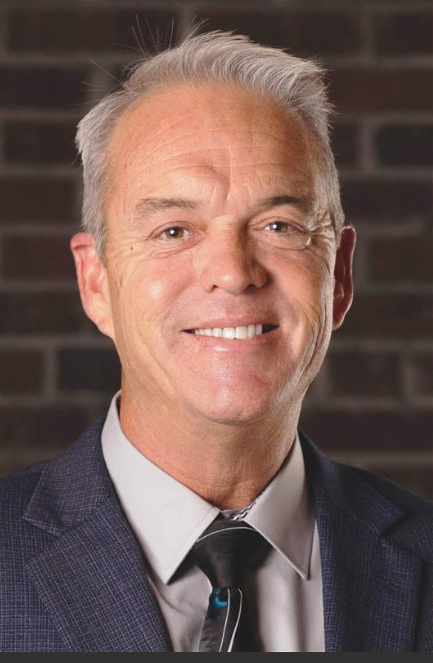
By: Paul Quigley, Chief Strategic Relations Officer, Airsys Cooling Technologies
Sponsored by Airsys
Quiet by Design. Efficient by Nature. Built with the Community in Mind.
If you live in Spartanburg County, you’ve probably seen the headlines lately. Data centers. Big numbers. Big power. Big questions. That’s fair. When something new and unfamiliar shows up in a community, people deserve straight answers, not buzzwords.
So let me start simply.
My name is Paul Quigley. I work at Airsys, and Airsys is already your neighbor.
We design and build cooling systems for data centers, the physical backbone of the digital world. But more importantly, we design them to be quieter, cleaner, and more respectful of the communities they live in. That matters, especially here.
Quiet Isn’t an Afterthought. It’s the Point.
One of the biggest concerns people raise about data centers is noise. And again, that’s fair. Traditional facilities rely on large mechanical chillers, essentially industrial-scale refrigeration plants, with compressors that run day and night.
Those compressors are loud.
A typical chiller plant can produce 75 to 85 decibels at the source, about the same as standing next to a busy highway or a diesel truck idling outside your house. Even with sound walls and distance, that noise travels, especially at night when everything else is quiet.
Now here’s the part most people don’t hear about.
Modern data centers don’t have to use chillers at all.
At AIRSYS, we design systems that eliminate compressors entirely by using dry coolers and advanced liquid cooling. No compressors. No refrigerant cycling. No constant mechanical pounding.
When you remove chillers from the equation, ambient noise drops by roughly 20 to 30 decibels. That’s not a small change. On the human scale, a 20-decibel reduction is perceived as about four times quieter.
Instead of highway noise, you’re closer to background airflow or a steady breeze through trees.
For neighbors, that difference matters.
Water Is Precious. We Treat It That Way.
Another concern we hear often is water use. Traditional cooling systems rely on evaporative cooling, which means water is continuously consumed, not recycled, not returned.
A large chiller-based data center can use millions of gallons of water every year, especially during hot months when communities need water the most.
Dry coolers change that.
Because they reject heat using air instead of evaporation, water use drops by 90 to 95 percent. In many cases, it goes effectively to zero for cooling operations.
That means less strain on municipal systems, fewer seasonal spikes, and more water left where it belongs, in the community.
Heat Doesn’t Have to Be Wasted.
There’s one more piece people rarely talk about. Heat.
Every data center produces heat. Traditionally, that heat is treated like trash, pushed out into the air and forgotten. But heat is energy. And energy can be reused. With modern liquid cooling, that heat can be captured and repurposed for things like space heating, domestic hot water, or nearby industrial processes. Instead of dumping waste heat into the sky, it becomes a resource.
That’s not theory. It’s already happening in parts of Europe, and it’s absolutely possible here.
A South Carolina Model for Responsible Growth
South Carolina has long proven that economic growth and environmental responsibility can coexist, and that balance is worth protecting. Under the leadership of Governor Henry McMaster, the state has attracted advanced manufacturing, technology, and infrastructure investment while remaining grounded in common sense, accountability, and community values.
Companies like Airsys reflect that approach in practice, designing systems that reduce water consumption, lower noise, eliminate unnecessary emissions, and reuse energy instead of wasting it. As federal and state conversations increasingly focus on ESG (Environmental Social and Governance) outcomes, South Carolina is well positioned to show that sustainability does not have to mean disruption. It can mean smarter engineering, quieter operations, and long-term benefits for both citizens and the environment.
This Is About Being a Good Neighbor.
AIRSYS isn’t a data center developer. We don’t own land. We don’t decide where buildings go. What we do is influence how they operate. Quieter, cleaner, more efficient and most importantly, more respectful of the people living nearby.
We believe data centers can exist without overwhelming communities. We believe technology and environmental responsibility are not opposites. And we believe South Carolina can lead, not follow, in how this industry evolves. That’s why we’re proud to be headquartered right here in Woodruff, South Carolina. It’s why we invest locally. And it’s why we care deeply about how these facilities show up in real neighborhoods, not just spreadsheets.
You don’t have to love data centers. But you should expect them to behave like good neighbors.
At Airsys, that expectation is built into our design.